On February 20, the METOP IASI instrument on the METOP 1-B satellite hit a record high global methane reading of 3096 PPB at 469 mb.
While only a temporary 12 hour reading, it is of interest that a couple of these very high readings have occurred in the last two months.
On January 8, 2016, we had a 12 hour spike of 2963 PPB at 586 mb on the METOP IASI 1-B instrument.
Unfortunately, we do not have MethaneTracker available to help us narrow the location, but given the slowdown in methane increases over the last couple of months, this will not shift the recent trends more toward the previous annual norms.
Source: http://www.ospo.noaa.gov/Products/atmosphere/soundings/iasi/index.html
Sunday, February 21, 2016
Saturday, January 9, 2016
Global IASI Mean Methane Smashes to New Record Spike High
On January 8, 2016, 12-24 hr, the EUMETSAT METOP 1-B IASI instrument measured a global mean methane spike of 2963 ppb during the 12-24 hr period.
This spike spears through the previous highest 12 hour reading set on April 25, 2015 of 2845 ppb by an almost 5 percent increase.

What is concerning is that in addition to being unusual, this comes on the heels of the recent January 2, 2016 spike to 2745 ppb, which until yesterday, had been the second highest reading in the METOP IASI record since December, 2012.
Time will tell if the increasing level of spikes and global means continues at an accelerating rate. but these are surprising and sobering numbers.
Source: http://www.ospo.noaa.gov/Products/atmosphere/soundings/iasi/index.html
This spike spears through the previous highest 12 hour reading set on April 25, 2015 of 2845 ppb by an almost 5 percent increase.

What is concerning is that in addition to being unusual, this comes on the heels of the recent January 2, 2016 spike to 2745 ppb, which until yesterday, had been the second highest reading in the METOP IASI record since December, 2012.
Time will tell if the increasing level of spikes and global means continues at an accelerating rate. but these are surprising and sobering numbers.
Source: http://www.ospo.noaa.gov/Products/atmosphere/soundings/iasi/index.html
Thursday, January 7, 2016
Preliminary NOAA ESRL 2015 Global Mean CO2 Just Under 400 ppm
The NOAA ESRL Global Monitoring Division has not yet released its official global CO2 annual mean on its website, but it has provided the basis for a preliminary figure. The data section at the bottom of the page shows that 2014's annual global CO2 mean was 397.16 ppm. However ESRL has released the preliminary annual mean growth rate for 2015 which is 2.73 ppm.
The math gives us 399.89 ppm for a preliminary global annual mean for 2015.
The problem is, we will likely easily pass a annual global mean of 400 ppm in 2016, and given continued El Nino and other warming factors - perhaps even 402 ppm.
Hopefully the next few days or weeks will see the official update become public.
Source:
Ed Dlugokencky and Pieter Tans, NOAA/ESRL (www.esrl.noaa.gov/gmd/ccgg/trends/)
ESRL Global Trends in Atmospheric Carbon Dioxide: http://www.esrl.noaa.gov/gmd/ccgg/trends/global.html
ESRL Global Annual Means Data: ftp://ftp.cmdl.noaa.gov/products/trends/co2/co2_annmean_gl.txt
ESRL Global Annual Means Growth Data: ftp://ftp.cmdl.noaa.gov/products/trends/co2/co2_gr_gl.txt
The math gives us 399.89 ppm for a preliminary global annual mean for 2015.
The problem is, we will likely easily pass a annual global mean of 400 ppm in 2016, and given continued El Nino and other warming factors - perhaps even 402 ppm.
Hopefully the next few days or weeks will see the official update become public.
Source:
Ed Dlugokencky and Pieter Tans, NOAA/ESRL (www.esrl.noaa.gov/gmd/ccgg/trends/)
ESRL Global Trends in Atmospheric Carbon Dioxide: http://www.esrl.noaa.gov/gmd/ccgg/trends/global.html
ESRL Global Annual Means Data: ftp://ftp.cmdl.noaa.gov/products/trends/co2/co2_annmean_gl.txt
ESRL Global Annual Means Growth Data: ftp://ftp.cmdl.noaa.gov/products/trends/co2/co2_gr_gl.txt
Southern Africa Drought Fuels Food Insecurity for Millions
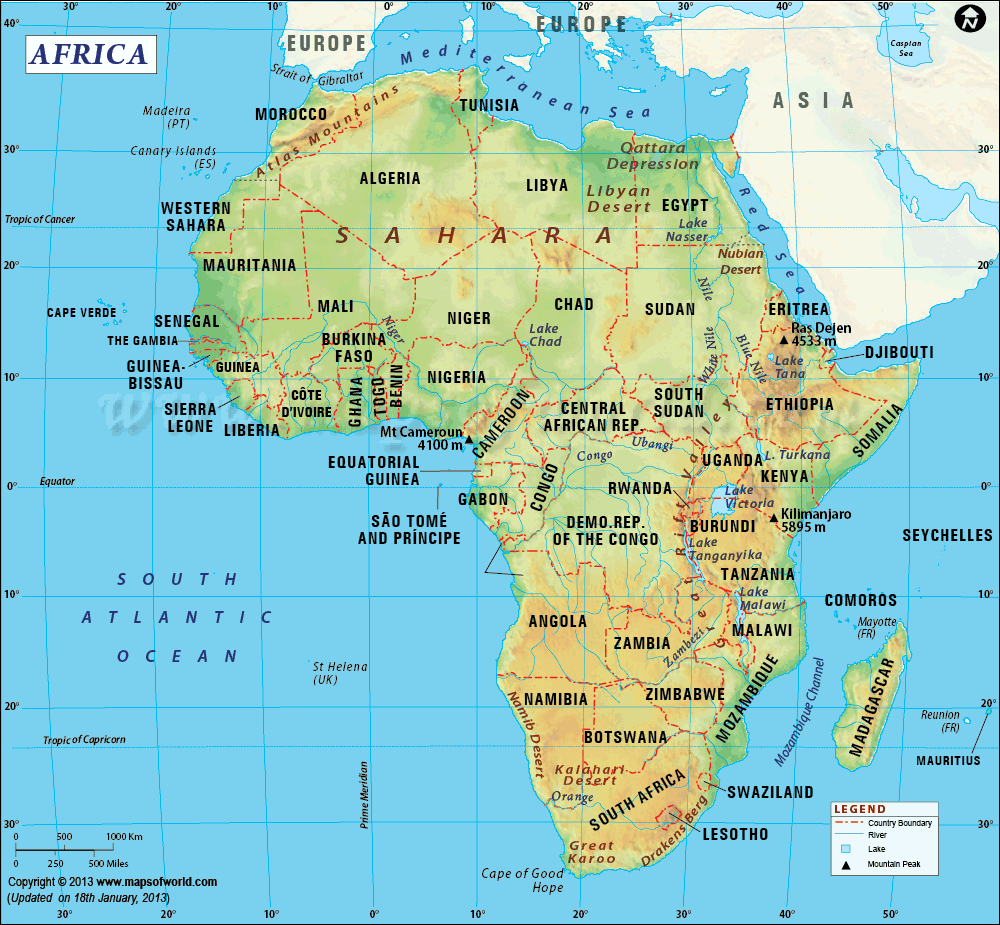
While Ethiopia has been getting headlines about drought and food scarcity, the larger problem is the scorching Southern Africa is under as it bakes in drought - in some areas the wort in 80 years. Dam levels are dropping, some are already dry. Water scarcity is increasing, and power rationing is in place in many countries. Crop failures are rampant across South Africa, Angola, Zimbabwe, Zambia and Mozambique.
Source: Maps of the World.com
The Climate Prediction Center rainfall anomalies for the last 6 months portray the mounting dire situation. Rain shortfalls in many areas are 100-200 mm. the Democratic Republic of Congo has some areas with a decline of 300 mm, much in central tropical forest areas.
Source: CPC
As a percent of normal, some areas have received less than 50% of normal rainfall.
Source: CPC
The situation has not eased during the last 30 days, in fact it has gotten worse. The October to January rainfall anomalies depict some areas getting as low as 5% of normal precipitation, during what should normally be a rainy season.
Source: CPC
The impacts on surface water storage in South Africa reveal dropping reservoirs and water restrictions in major cities, plus water being tankered to outlying areas. Some dams are already at critical levels.
Source: dwaf.gov.za
South Africa has just announced that it will have to import up to 5 million tons of corn to get through the next season. According to Yahoo-Reuters, Jannie de Villiers, Chief Executive of Grain SA stated today, "We can now, with a lot of confidence, say we are in a disaster in the maize belt,"
AS Bloomberg reported, impacts have been a 250% increase in corn prices, much of the spike coming in November and December.
The result is that millions are already in stages of deepening hunger. Zambia's government has banned government sales of corn to Zimbabwe, which has maybe 8 weeks of grain left to feed the country, not enough for the developing crisis. This leaves 1.5 million Zimbabweans facing severe food insecurity in the next two months, in addition to those already malnourished across the country.
Sources:
Africa Rainfall and Temp Anomalies: http://www.cpc.ncep.noaa.gov/products/international/africa/africa.shtml
South Africa Water Storage Status: https://www.dwaf.gov.za/hydrology/Weekly/Storage.aspx
Yahoo-Reuters: http://news.yahoo.com/zimbabwe-power-firm-says-drought-cut-supply-mulls-100322429.html
Bloomberg: http://www.bloomberg.com/news/articles/2016-01-06/south-africa-seen-importing-almost-half-of-corn-needs-on-drought
Zimbabwe: http://ewn.co.za/2016/01/01/Zimbabwe-to-step-up-food-imports-as-drought-hits-production-badly
Zambia: https://www.newsday.co.zw/2016/01/05/zambia-has-not-banned-maize-exports-to-zim/
Source: Maps of the World.com
The Climate Prediction Center rainfall anomalies for the last 6 months portray the mounting dire situation. Rain shortfalls in many areas are 100-200 mm. the Democratic Republic of Congo has some areas with a decline of 300 mm, much in central tropical forest areas.
Source: CPC
As a percent of normal, some areas have received less than 50% of normal rainfall.
Source: CPC
The situation has not eased during the last 30 days, in fact it has gotten worse. The October to January rainfall anomalies depict some areas getting as low as 5% of normal precipitation, during what should normally be a rainy season.
Source: CPC

The impacts on surface water storage in South Africa reveal dropping reservoirs and water restrictions in major cities, plus water being tankered to outlying areas. Some dams are already at critical levels.
Source: dwaf.gov.za
South Africa has just announced that it will have to import up to 5 million tons of corn to get through the next season. According to Yahoo-Reuters, Jannie de Villiers, Chief Executive of Grain SA stated today, "We can now, with a lot of confidence, say we are in a disaster in the maize belt,"
"We will be lucky if we produce
5 million tonnes this year and then we will need to import 5 million tonnes.
This is the sort of scenario that we are looking at."
AS Bloomberg reported, impacts have been a 250% increase in corn prices, much of the spike coming in November and December.
The result is that millions are already in stages of deepening hunger. Zambia's government has banned government sales of corn to Zimbabwe, which has maybe 8 weeks of grain left to feed the country, not enough for the developing crisis. This leaves 1.5 million Zimbabweans facing severe food insecurity in the next two months, in addition to those already malnourished across the country.
Sources:
Africa Rainfall and Temp Anomalies: http://www.cpc.ncep.noaa.gov/products/international/africa/africa.shtml
South Africa Water Storage Status: https://www.dwaf.gov.za/hydrology/Weekly/Storage.aspx
Yahoo-Reuters: http://news.yahoo.com/zimbabwe-power-firm-says-drought-cut-supply-mulls-100322429.html
Bloomberg: http://www.bloomberg.com/news/articles/2016-01-06/south-africa-seen-importing-almost-half-of-corn-needs-on-drought
Zimbabwe: http://ewn.co.za/2016/01/01/Zimbabwe-to-step-up-food-imports-as-drought-hits-production-badly
Subscribe to:
Posts (Atom)